Lead Market Dynamics: Rising Prices, Inventory Concerns, and Strategic Decisions [SMM Analysis]

Published: Mar 13, 2025 14:26
Source: SMM
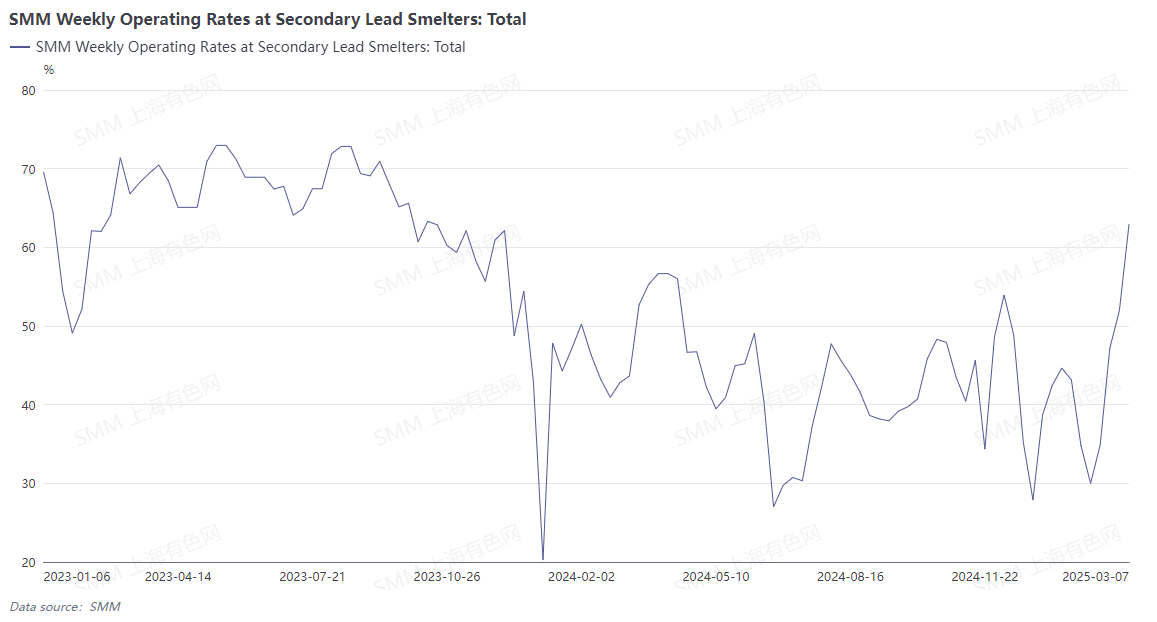
In March 2025, secondary lead enterprises resumed production at a rapid pace, with the weekly operating rate reaching 62.91%, a 1.5-year high. Lead prices rose as the US Dollar weakened and domestic policies supported the market. However, air pollution warnings in northern China led to smelter shutdowns, further driving up prices. Despite initial ample inventories, smelters now face declining raw material stocks due to increased production and off-season scrap battery supply. This has created a standoff between smelters and scrap dealers, with both sides awaiting market clarity.

As March arrives, the resumption of production at secondary lead enterprises has entered a critical phase. By March 7, 2025, the weekly operating rate monitored by SMM (Shanghai Metals Market) reached 62.91%, the highest level in one and a half years. Recently, lead prices have finally broken free from the narrow, indecisive trading range that characterized the market previously.
The weak performance of the US Dollar Index has spurred a general increase in non-ferrous metals prices, while favorable domestic macroeconomic consumption policies have further shifted the trading center of SHFE (Shanghai Futures Exchange) lead upwards.

Additionally, several provinces in northern China have issued severe air pollution warnings, resulting in the shutdown of secondary lead smelters in regions such as Shandong and Henan. This has further propelled lead prices upward. In February, following the holiday period, lead prices performed poorly, and scrap dealers, fearing price declines, were inclined to sell off their inventories. Meanwhile, most smelters had not yet resumed production, leaving those in operation with relatively ample raw material inventories.

However, with the recent wave of smelter resumptions and the fact that it is currently the off-season for the scrapping of lead-acid batteries, raw material inventories have significantly decreased after more than half a month of consumption. Scrap dealers, now optimistic about rising prices, have become reluctant to sell, leading to a gradual decline in deliveries to smelters.
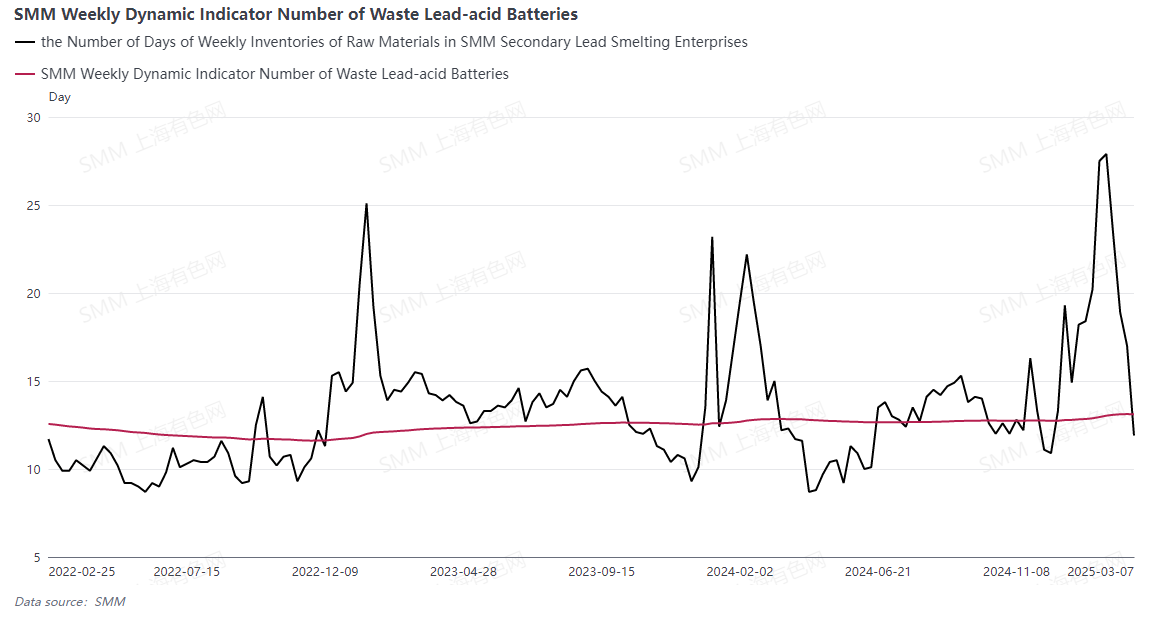
From the perspective of weekly raw material inventory days at smelters, the current level is already below the average. Yet, smelters are not eager to replenish their inventories by raising purchase quotes for scrap batteries. The reason lies in their bearish expectations for lead prices in late March. Currently, they have not engaged in large-scale inventory replenishment for three main reasons: first, to avoid the devaluation of excessive raw material inventories; second, to preserve existing profit margins; and third, to anticipate that scrap dealers will sell off their inventories when lead prices decline, allowing smelters to replenish at lower prices.

On the other hand, despite being in the off-season for scrapping, the current bullish sentiment among scrap dealers has led to a daily accumulation of scrap battery inventories, tying up a significant amount of capital. In this game of strategy, smelters, operating at such a high capacity with dwindling raw material inventories, face a choice: to reduce production or to increase raw material procurement prices. Meanwhile, scrap dealers are also under pressure to decide whether to sell quickly at current market prices or to hold onto their inventories in anticipation of further price increases. Which side will blink first? Stay tuned for the insights provided by next week's SMM survey.

Data Source Statement: Except for publicly available information, all other data are processed by SMM based on publicly available information, market communication, and relying on SMM‘s internal database model. They are for reference only and do not constitute decision-making recommendations.

For any inquiries or to learn more information, please contact: lemonzhao@smm.cn
For more information on how to access our research reports, please contact:service.en@smm.cn
Related News
Lead Prices Stagnant, Smelters Maintain Firm Offers Amid Losses
17 hours ago
Lead Prices Stagnant, Smelters Maintain Firm Offers Amid Losses
Read More
Lead Prices Stagnant, Smelters Maintain Firm Offers Amid Losses
Lead prices were in the doldrums, while secondary lead smelters maintained firm offers due to losses. The mainstream spot order ex-factory prices including tax narrowed the discount to the SMM #1 lead average price by 100 yuan/mt, shifting to a premium of 0–25 yuan/mt, with some smelters halting offers and sales.
17 hours ago
"Domestic Secondary Crude Lead Market Slows as Holidays Approach, Smelters Halt Production"
17 hours ago
"Domestic Secondary Crude Lead Market Slows as Holidays Approach, Smelters Halt Production"
Read More
"Domestic Secondary Crude Lead Market Slows as Holidays Approach, Smelters Halt Production"
Pre-holiday stockpiling by downstream enterprises had largely concluded, and a few had already entered the holiday period, completely suspending procurement. Next week, secondary lead smelters will enter a concentrated wave of production halts and holidays, resulting in sluggish trading activity in the spot market. Offers for spot refined lead orders were sparse, with prices moving in line with the market.
17 hours ago
Sluggish Transactions in Domestic Secondary Crude Lead Market, Prices at 15,250-15,400 Yuan/mt
17 hours ago
Sluggish Transactions in Domestic Secondary Crude Lead Market, Prices at 15,250-15,400 Yuan/mt
Read More
Sluggish Transactions in Domestic Secondary Crude Lead Market, Prices at 15,250-15,400 Yuan/mt
The domestic secondary crude lead market experienced sluggish transactions. As of February 6, 2026, the ex-factory tax-exclusive offers for domestic secondary crude lead stood at 15,250-15,400 yuan/mt. Downstream refined lead and alloy smelters gradually entered the holiday period, showing weak stockpiling willingness. Overseas lead ingot suppliers basically halted transactions with China due to poor consumption in the Chinese market, with only some previously concluded shipments maintaining normal in-transit transportation. The trading atmosphere in the secondary crude lead market will continue to weaken next week.
17 hours ago